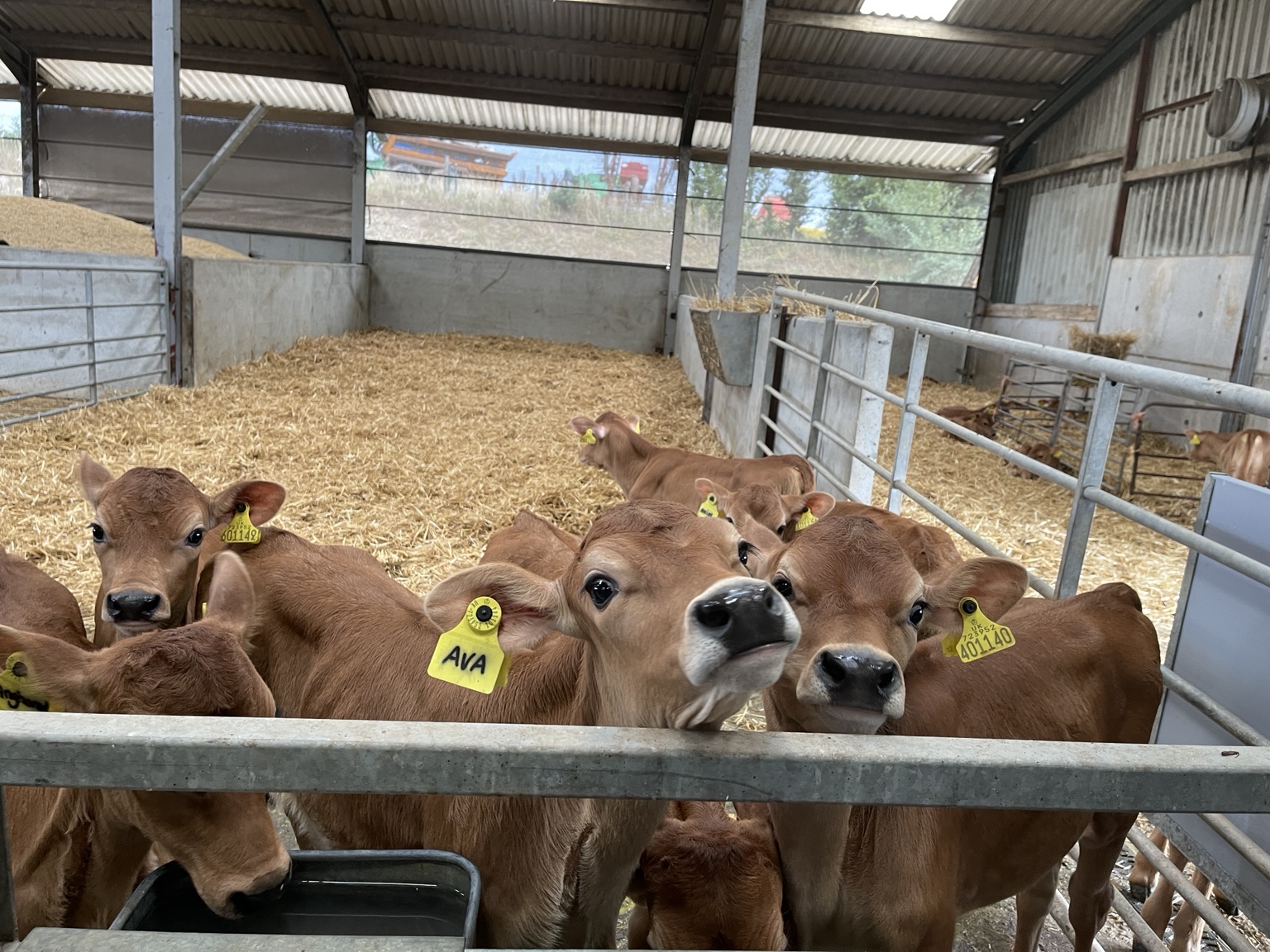
Ava as a calf · June 2023
Meet Ava
Ava grew up here at Primrose. This is her as a calf in June 2023, already sporting her own name tag. Wonky is her mum. Our cartoon Ava helps younger visitors explore the farm.
A little closer to farm life
Welcome to Primrose Dairies, our Jersey dairy farm in South Wales. Meet the girls, follow their day and discover how we feed them, keep them comfortable and use robotic milking alongside hands-on care.
From named calves to Mooo-ber Eats and the “poo nu-nu” — come and see what makes up a day at Primrose.
Meet our cows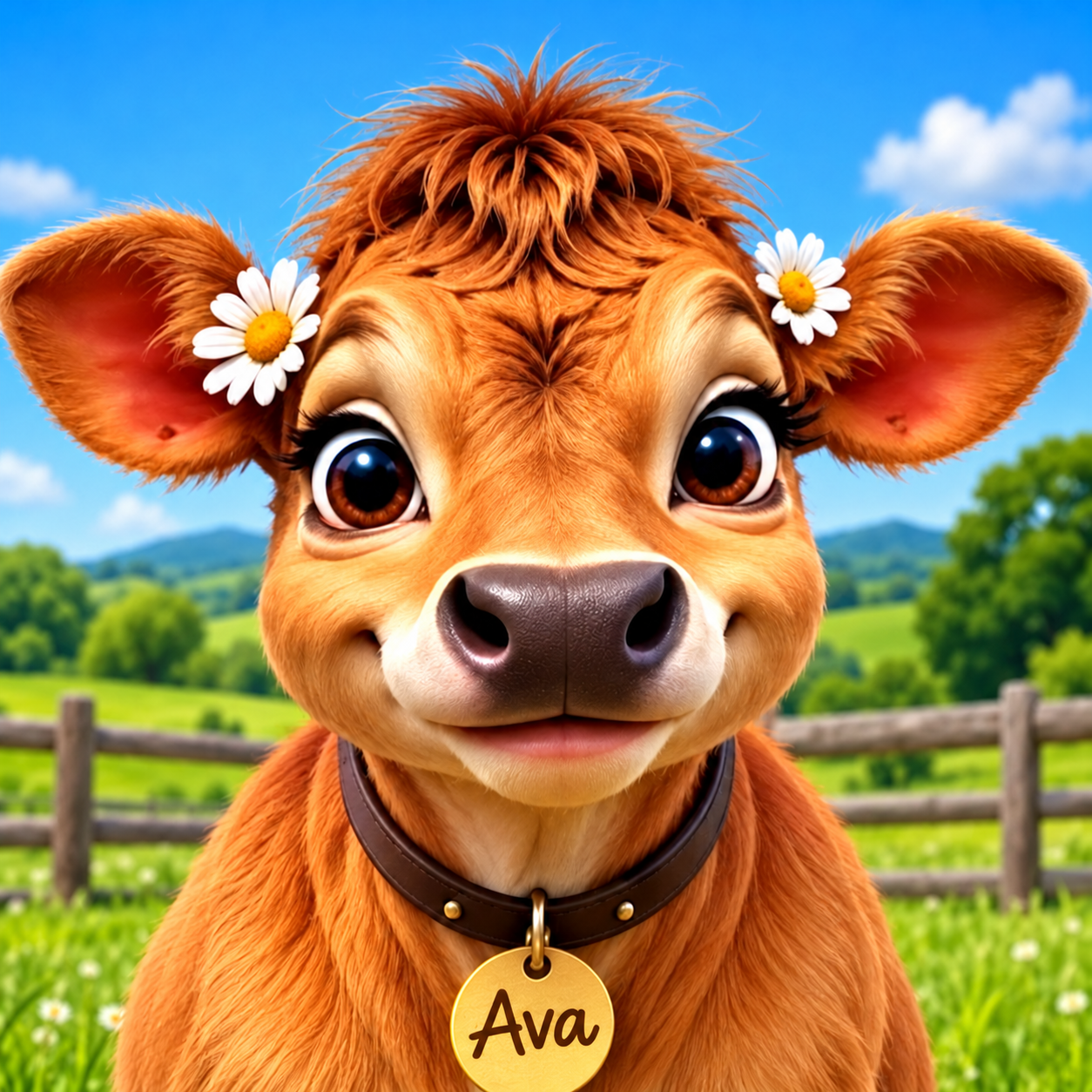
Meet cartoon Ava — your guide to the farm
Meet our cows
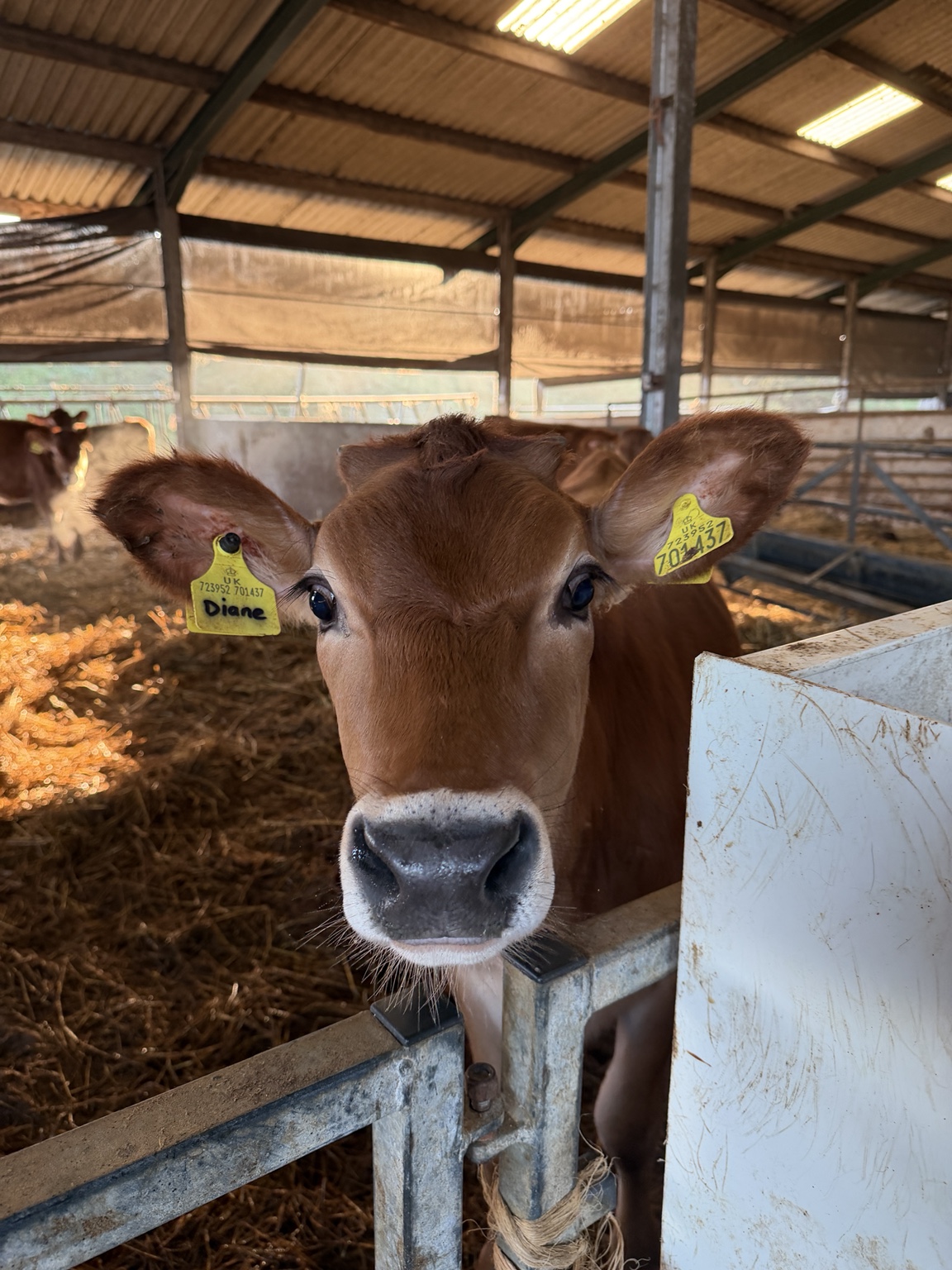
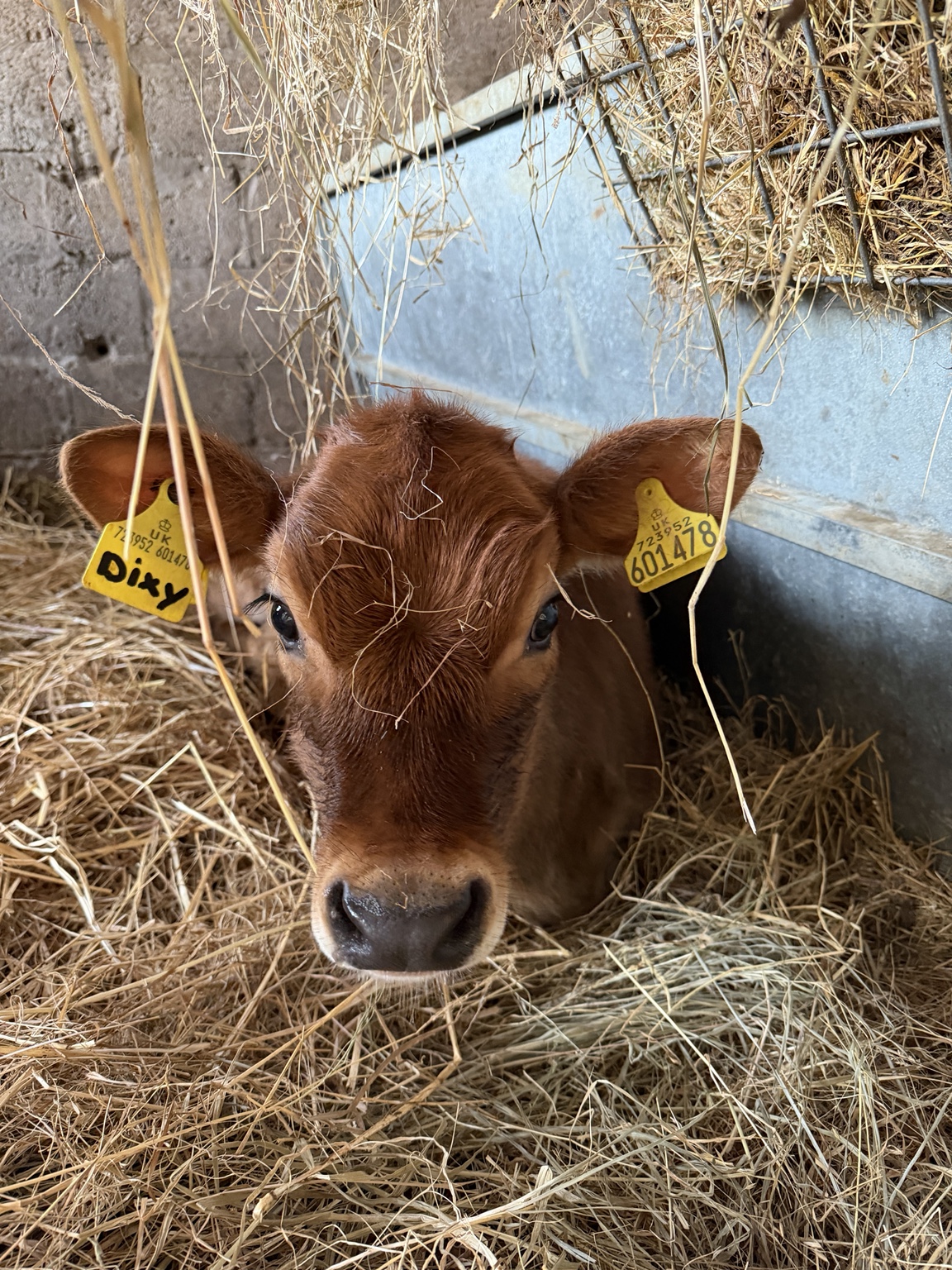
Spend time with a herd and you soon get to know the individuals. Some are curious, some more reserved. Our homebred calves receive names as well as their identification numbers.
Ava as a calf · June 2023
Ava grew up here at Primrose. This is her as a calf in June 2023, already sporting her own name tag. Wonky is her mum. Our cartoon Ava helps younger visitors explore the farm.
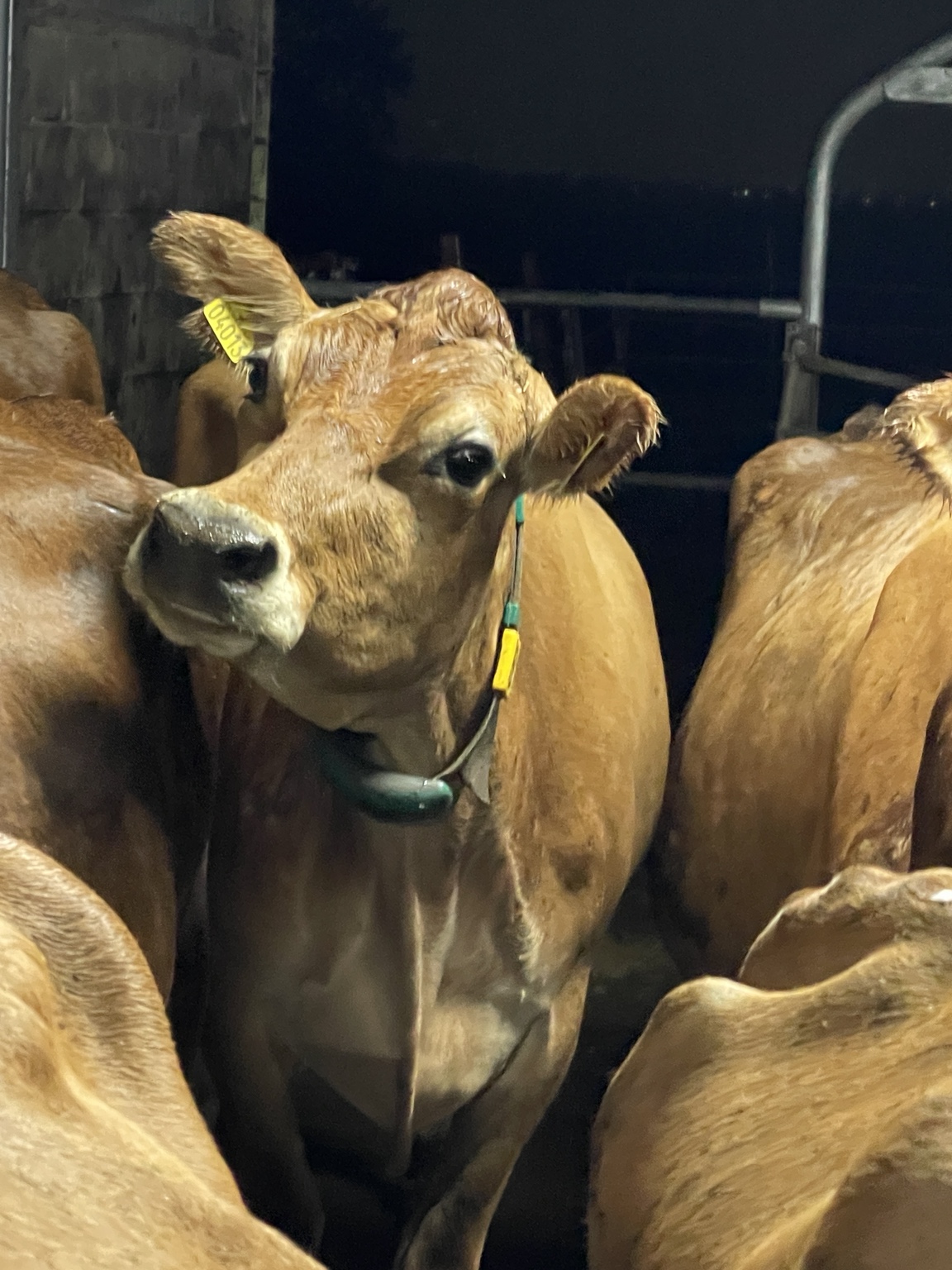
Meet Ava’s mum
Wonky is part of the Primrose family — and Ava’s mum. Knowing the cows as individuals means their family stories become part of our farm’s story too.
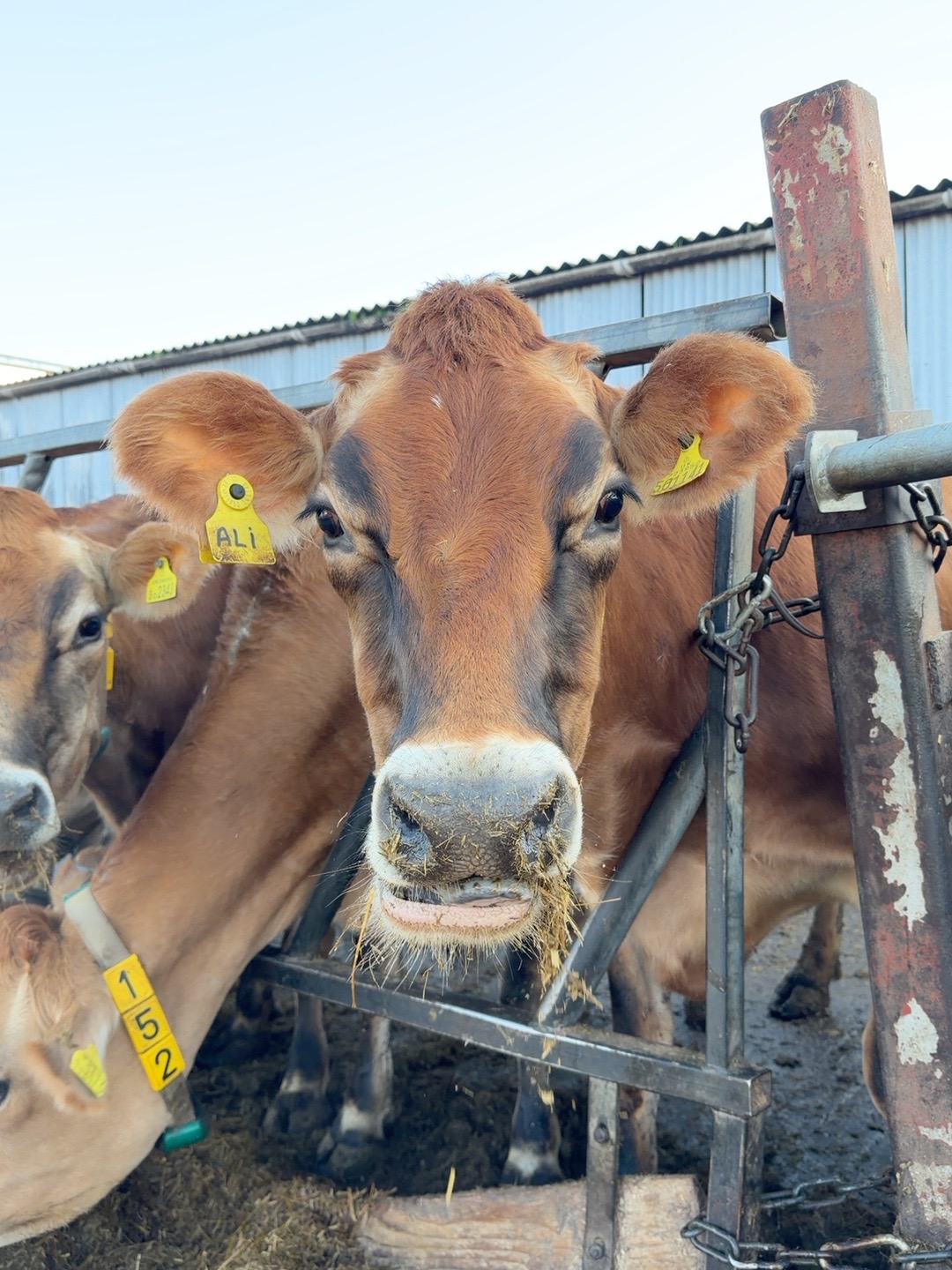
Born here · 13 June 2023
Ali was our second calf, born on 13 June 2023. She stayed and grew up at Primrose, alongside the other Jersey calves born here at that time.
Robotic milking
Our GEA R9500 milking robots let cows make visits through the day and night. The machinery does the milking; our team remains responsible for the cows.
Cows move through a guided system. When a cow can be milked depends on her individual settings and how recently she last visited. Feed offered in the robot helps encourage visits.
An electronic identifier tells the system which cow is visiting and checks whether she is due to be milked.
The system prepares the teats and attaches the milking cups. Milk travels through the milking system towards cooled storage; milk that must be kept out of the food supply is diverted.
The robot offers an allocated amount of feed. Visits are voluntary within the farm’s guided traffic and milking settings; cows may also need a farmer’s encouragement or help.
Milking records and alerts help us spot changes. We combine that information with looking at, handling and caring for the animals every day.
Cow comfort & welfare
Our cows are housed year-round, with outdoor access by choice. We are not a conventional grazing herd: their daily diet is brought to them.
Housing helps us provide consistent access to feed and shelter, and manage conditions when our heavy clay ground is wet. It also means the quality of the indoor environment needs daily attention.
Technology helps us monitor the herd, but it cannot replace good stockmanship or veterinary care.
Individual cubicles and mattresses provide resting spaces. Bedding and cleanliness are part of the daily routine.
Ventilation and fans help move air through the building. We watch how the cows respond as conditions change.
Feed is brought to the barrier and pushed within reach. We check feed access and drinking water as part of caring for the herd.
We monitor appetite, movement, feet, udders and behaviour, alongside milking information, and arrange treatment when needed.
Calves & youngstock
Raising our own Jersey replacements lets us follow an animal’s development from a young calf to an adult cow.
Calf care starts with attention to colostrum — the first milk, which supplies important antibodies — followed by suitable feeding, clean bedding and close observation.
As calves grow, their diet and housing needs change. We watch their appetite, health and development, rather than treating every youngster as identical.
Names, faces and new beginnings
Growing the cows’ food
Much of a dairy cow’s day revolves around eating, resting and chewing the cud. Our job is to grow and store forage, then put together a diet that meets the herd’s needs.
Grass and maize are important forage crops for our herd. Weather, soils and the growing season all influence what we harvest.
We harvest grass for silage and chop maize for storage. Crop maturity and harvesting conditions affect feed quality.
Silage is preserved by fermentation with air excluded. Careful packing and covering help protect the crop after harvest.
Forage is mixed with other ingredients. Feed analysis helps us balance fibre, energy, protein and minerals, with additional feed allocated through the robots.
Farm technology
Machines help with repetitive jobs. People keep them running, check the results and look after the animals.
Our GEA R9500 robots milk cows and record information about their visits. That helps us keep track of each animal.
Little farmers: a milking station that recognises its visitors.
Meet our feed pusher — affectionately known as the “food nu-nu”. Once the ration has been mixed and delivered, Mooo-ber Eats pushes it back within the girls’ reach as they eat.
Little farmers: dinner getting too far away? Mooo-ber Eats brings it back within reach. No app required!
Our JOZ cleaning robot helps keep the cow passages clear of slurry. It is one part of the work that goes into keeping their environment clean.
Little farmers: a robot with a messy job — and a very useful one!
Sustainability & recycling
Slurry and manure contain nutrients that crops can use. Returning them to the land links the cows, their feed and our fields.
That needs care: storage, timing, soil conditions and application rates matter. Recycling nutrients does not make their environmental impact disappear.
Responsible farming also means paying attention to feed waste, water, energy and equipment. We’ll share specific improvements as we can show what they achieve.
A few good questions
Our system centres on housing and a diet brought to the herd, with outdoor access by choice. It helps us manage feeding and shelter on heavy clay ground, especially in wet conditions. Good indoor care remains essential.
No. They carry out particular tasks and provide information. Farmers still check the cows, care for calves, manage feed, maintain equipment and respond when an animal needs attention.
Yes. Its nutrients can support crops when applied appropriately. The amount and timing need to match crop needs and suitable conditions.
This website is a way to explore farm life from home or school. We are a working farm; please do not arrive without an agreed arrangement. Visitor and school enquiry details will be added here when available.
Ava explains · for curious little farmers
I’m the farm’s cartoon guide. Real cows can’t talk, so I’m here to help tell their story. Tap a question and see what you discover.
Sort of! Grass or maize is harvested and stored with the air kept out. Fermentation preserves it, so the farmer can feed it later. Think of food saved from the growing season for another day.
She may be chewing the cud! Cows bring some feed back up to chew again. It helps them break down the fibrous plants in their diet.
Keeping passages clean is a regular job. Our JOZ robot helps with the messy work, while people check the machine and the cows’ surroundings. Robots need looking after too!
Each cow has an electronic identifier. When she visits, the system checks her records. It’s a bit like having her own library card — but for the milking robot.
About & contact
Primrose Dairies Ltd is a Jersey dairy farm in South Wales. This website opens a window onto the people, animals and everyday decisions behind dairy farming.
Whether you are curious about a cow’s day, learning about food at school or interested in the machines, we hope you find something to explore.
Getting in touch: our public contact details will be added here soon.